02
Sila Pay
A multi-currency payment gateway for digital commerce
Sila Pay is a payment gateway and fintech platform for digital commerce, bringing payments, balances, checkout, payment links, integrations, crypto-ready flows, and business operations into one ecosystem. I was the designer responsible for turning that breadth into a coherent cross-platform experience across mobile, desktop and internal tools.
Context and challenge
The product needed to operate at the intersection of payments, banking and commerce. Merchants had to move between everyday financial operations, payment acceptance, checkout, integrations, customer support and internal administration without feeling that they were switching products.
The experience also had to work across currencies, crypto-enabled use cases and international contexts. Product direction and project guidelines came from Russia, while the design work required continuous alignment with international stakeholders, distributed teams and different market expectations.
Approach and process
I worked from the design guidelines into a complete product language: visual principles, UI patterns, interaction rules, responsive behavior, component states and documentation for cross-functional delivery. The design system was not treated as a static library; it became the connective tissue between the consumer app, merchant dashboards, internal systems and CRM workflows.
The work moved between journeys and levels of abstraction: onboarding and account creation, balances and transactions, PIX, card and boleto flows, crypto, payment links, checkout, integrations, analytics and support. I designed for desktop and mobile in parallel so the system could adapt without losing hierarchy or recognition.
Because the products were multilingual by design, the system also had to absorb seven languages: longer labels, different text densities, translated content and international collaboration were considered as part of the UX rather than left to the end.
Key design decisions
The first decision was to create a strong visual anchor for a complex fintech ecosystem. A dark interface, vivid gradient accents and high-contrast states gave the product a recognizable character while preserving the seriousness expected from a payment platform.
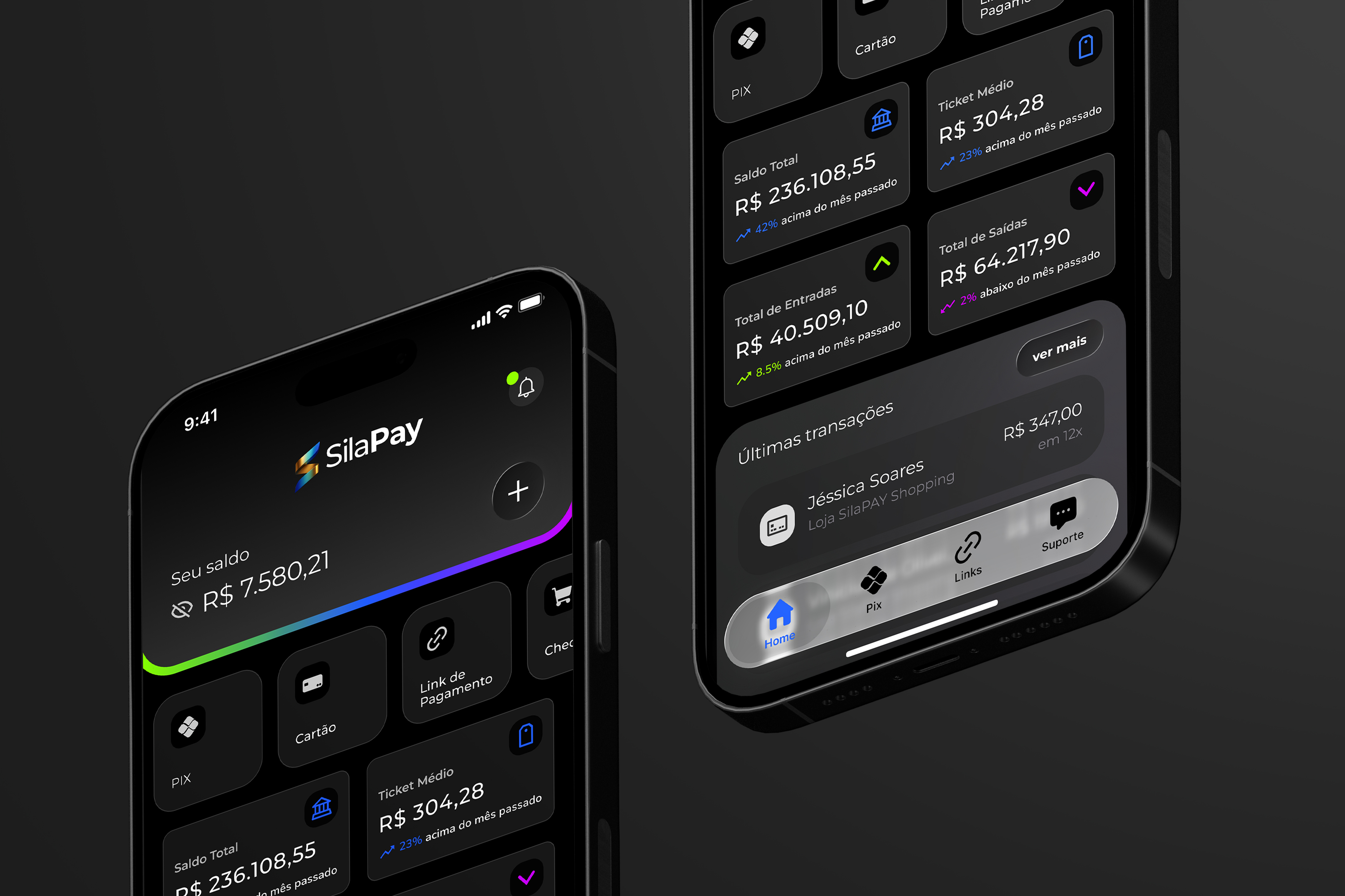
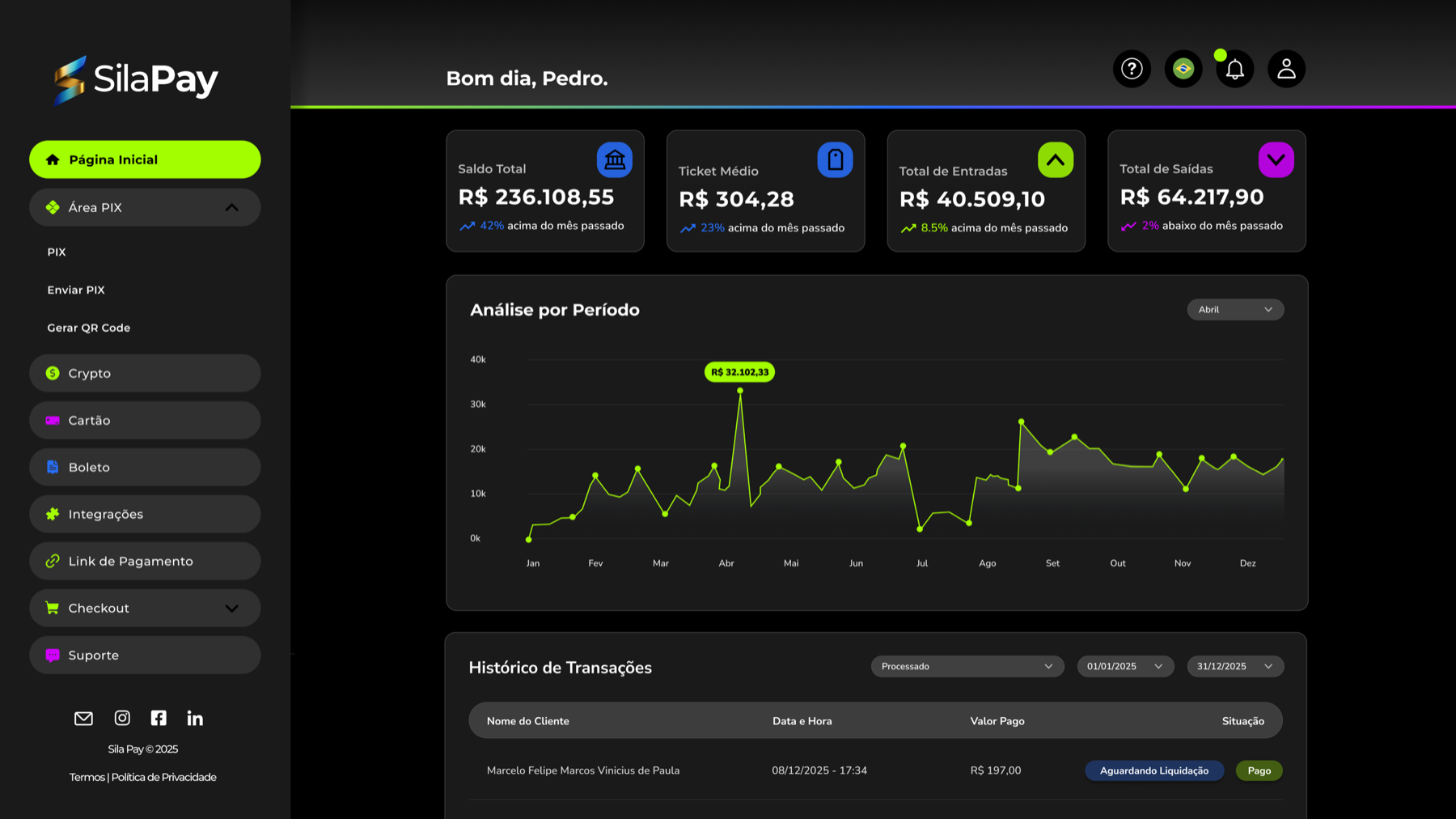
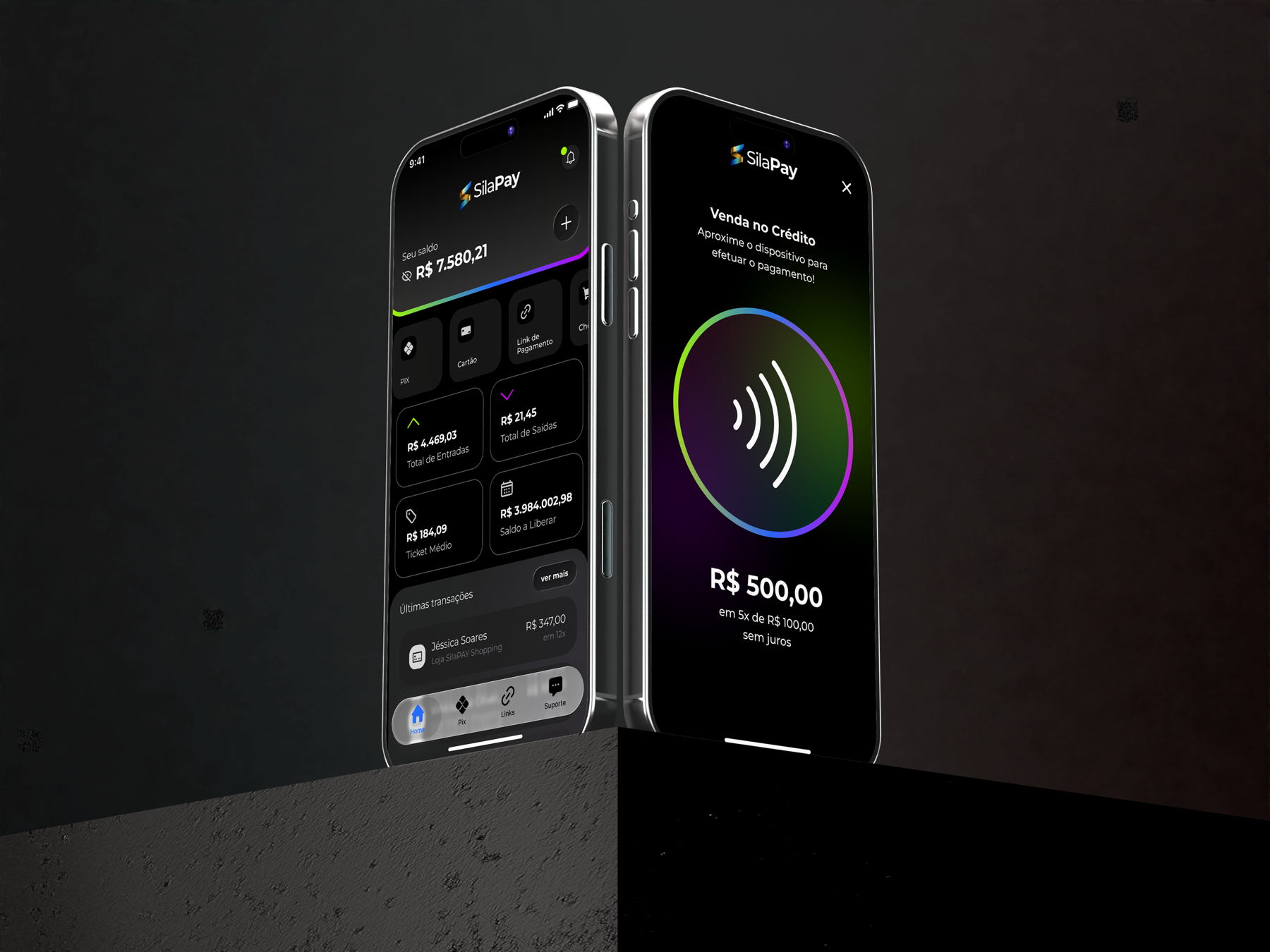
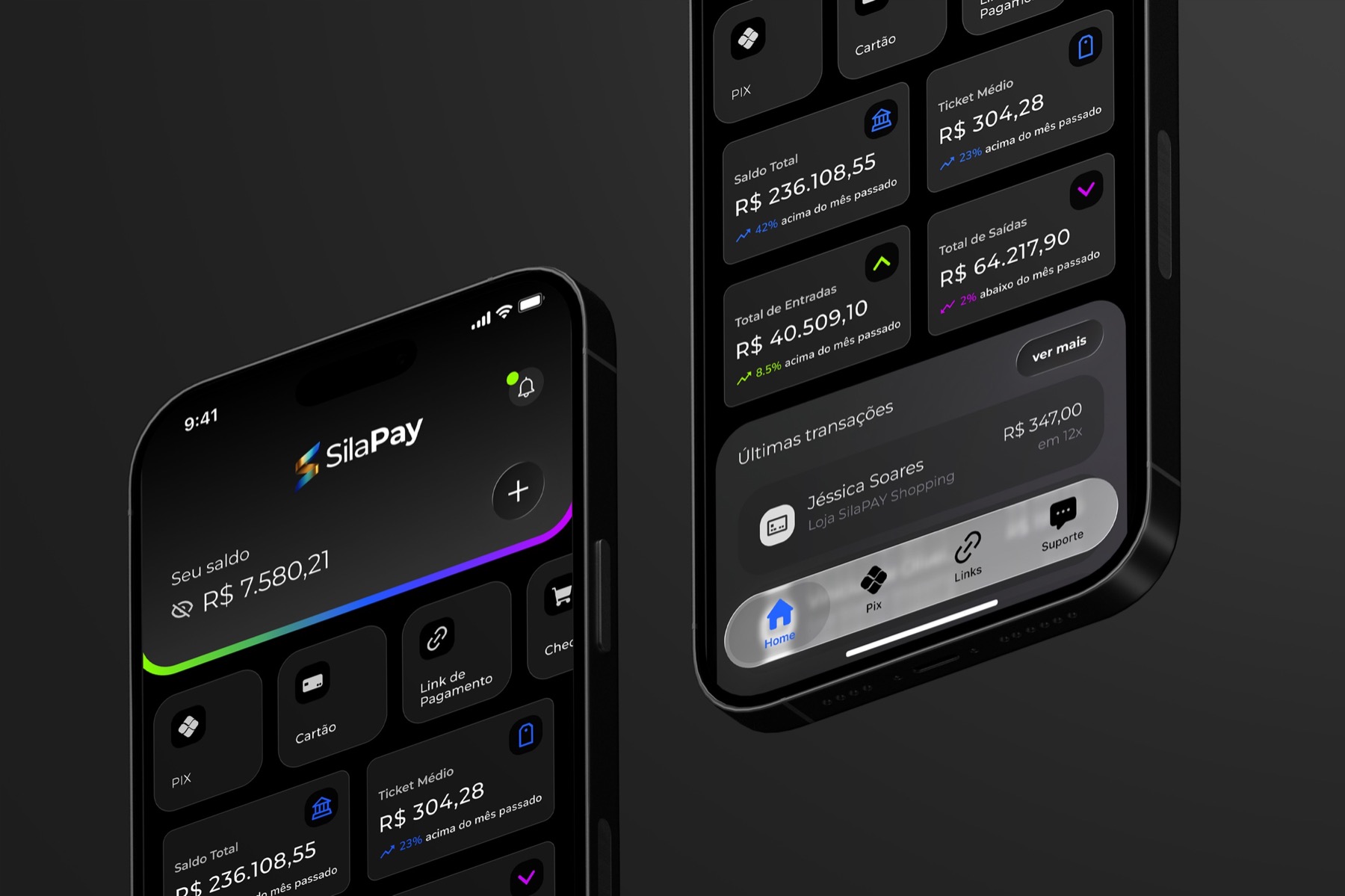
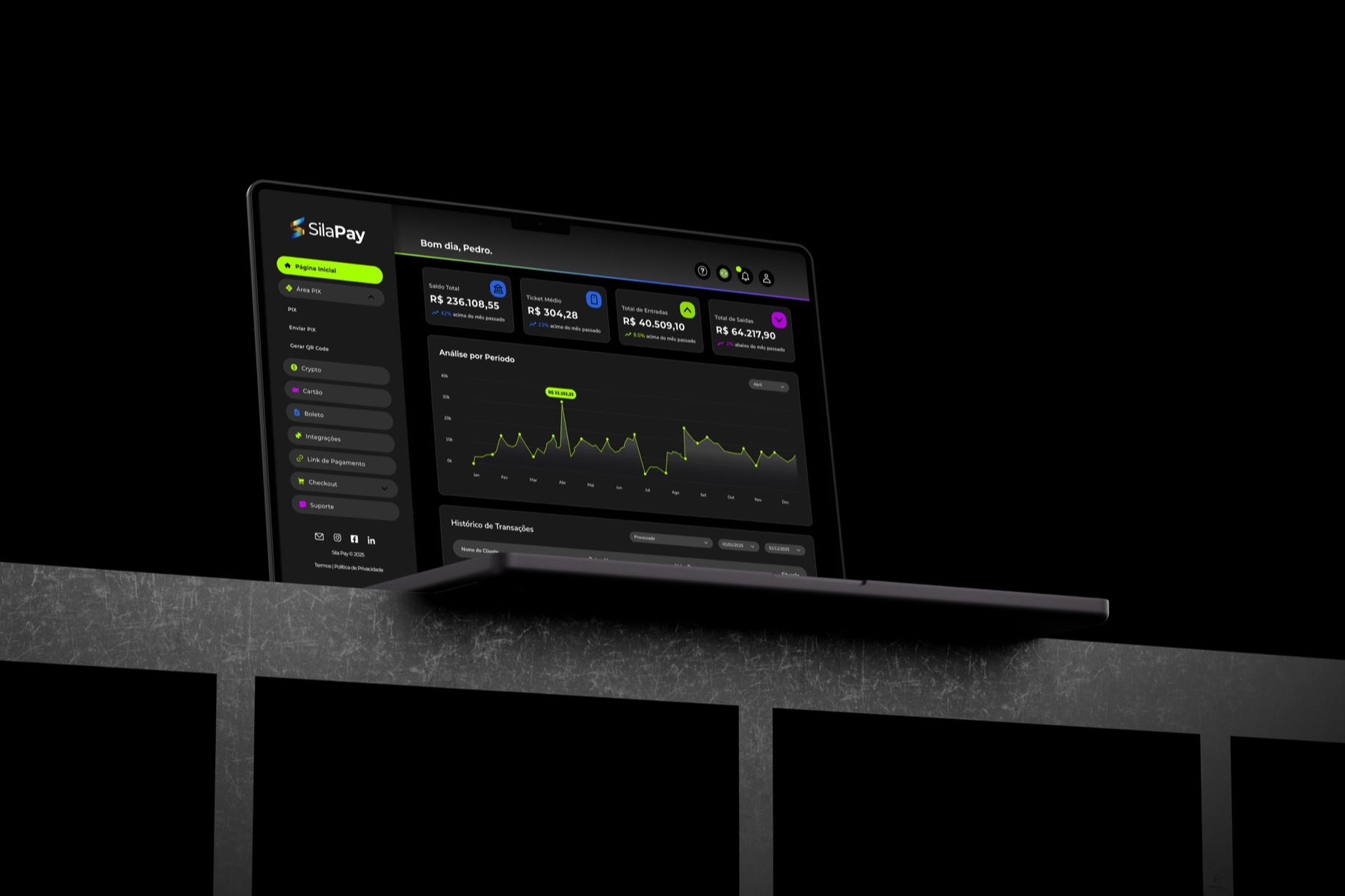
The second was to make the dashboard feel operational, not ornamental. Balances, transaction history, payment performance and shortcuts were organized so users could understand the state of the business and act quickly. The mobile experience translated the same logic into compact cards, touch targets and a focused navigation model.
The third was to design the system for continuity. Components, guidelines and responsive rules allowed the same principles to travel across customer-facing apps, merchant operations, CRM, internal tools and future fintech solutions.

Final experience and visuals
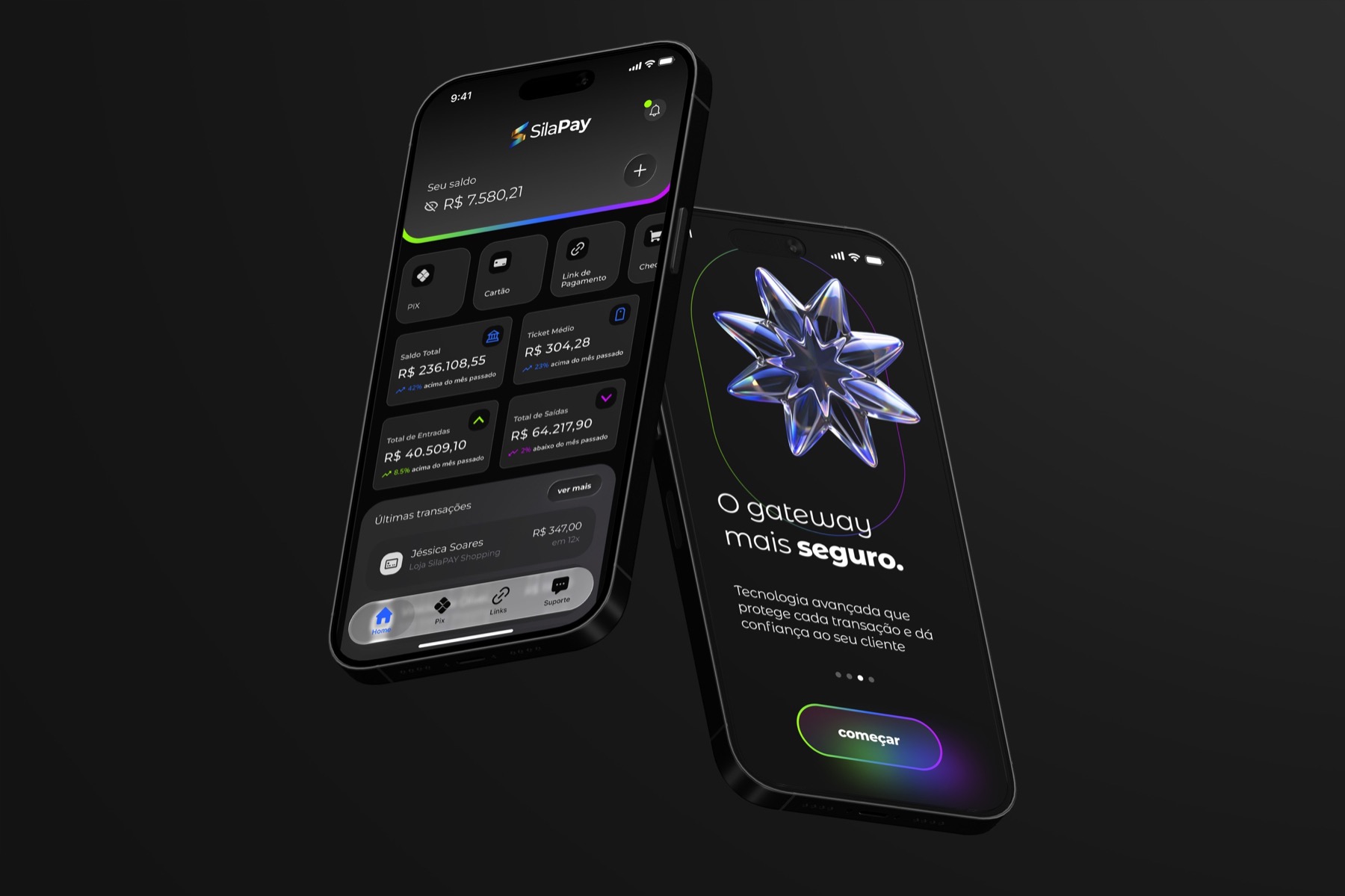
The visual language combines financial confidence with a more expressive digital identity: dark surfaces, electric green, blue and violet signals, luminous gradients, and abstract 3D forms. The moodboard is part of the system, not an afterthought; it gives the product a distinct emotional register in a category often dominated by generic interfaces.
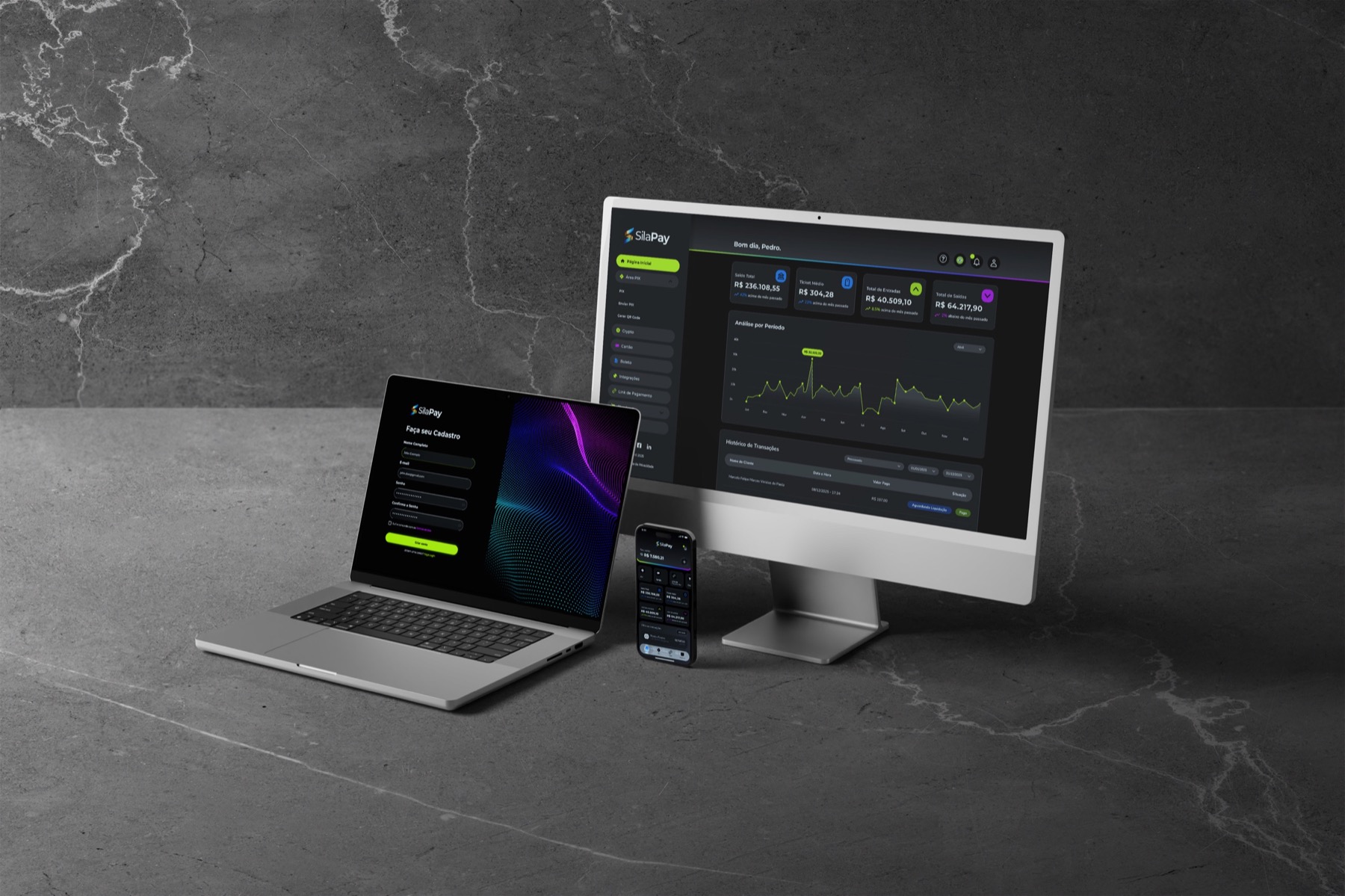
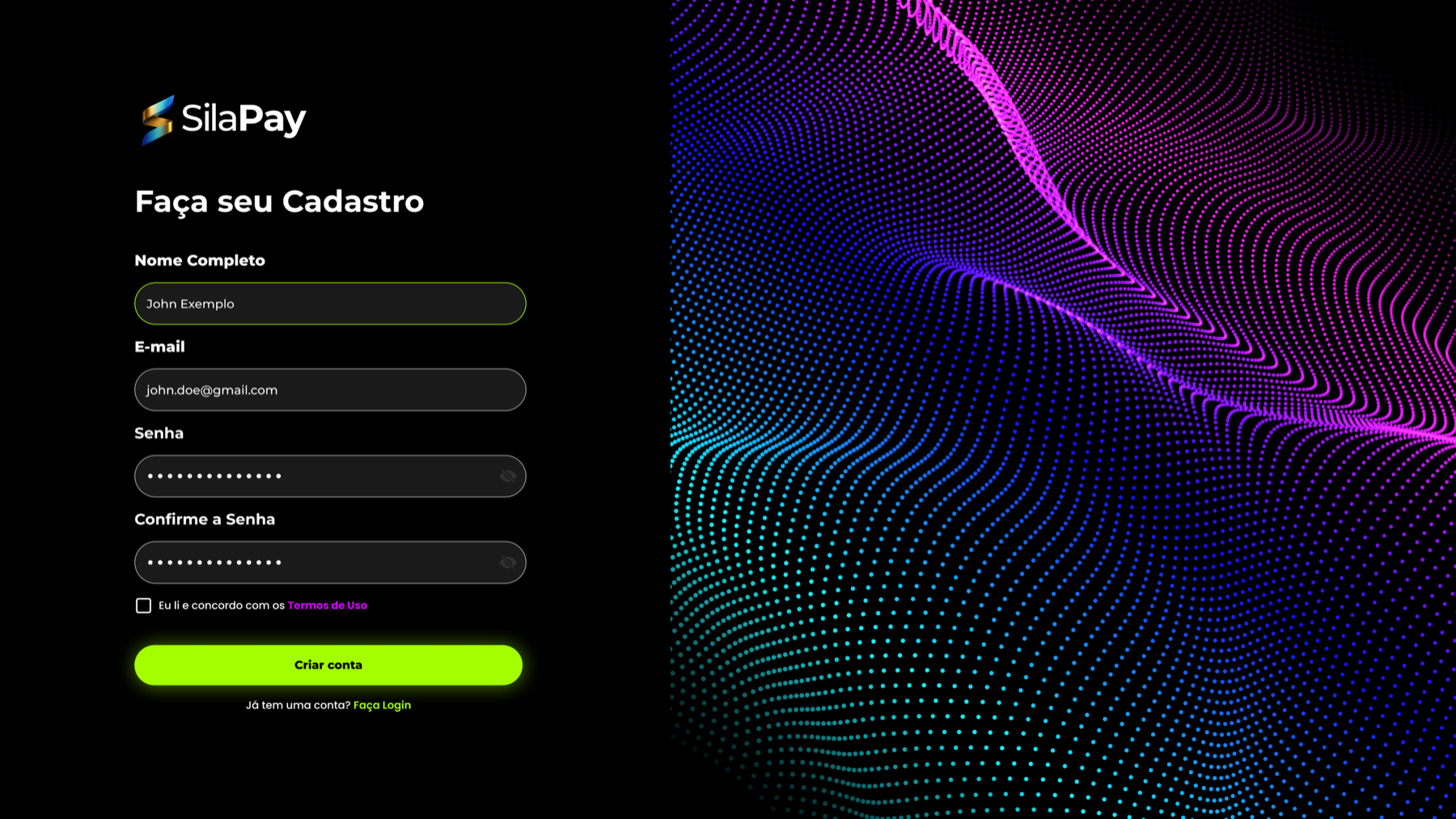
The selected screens show the range of the work: desktop dashboards, responsive mobile banking experiences, onboarding, registration, credit and payment moments, multi-device compositions and the visual assets that helped unify the ecosystem.


Outcomes and learnings
languages designed into the product ecosystem
connected surfaces: app, dashboards, internal systems and CRM
design ownership from guidelines and system foundations to final delivery
The result was a cross-platform fintech design foundation that could scale across products, teams and markets. Sila Pay gained a coherent relationship between brand, guidelines, design system and delivery, with the same UX logic visible in the app, dashboards, internal systems and CRM.
The final metrics are scope markers rather than commercial KPIs: they describe the breadth of the design responsibility and the product conditions the system was built to support. The larger outcome was a more unified payment experience, capable of carrying complex financial operations across seven languages and multiple device contexts.