01
Iungo AI Suite
A UX-led product system for intelligent commerce operations
I led the UX direction for Iungo AI Suite, a connected portfolio of AI products built for commerce operations. My role covered the full design arc: framing the product architecture, defining how the solutions relate to one another, creating the design system, and bringing the concepts through to the final screens.

Context and challenge
Iungo was evolving from a set of capabilities into a coherent suite of AI products for commerce. The UX challenge was to make that system understandable and usable across very different levels of complexity: portfolio strategy, operational workflows, catalog data, campaign performance, and AI-assisted decisions.
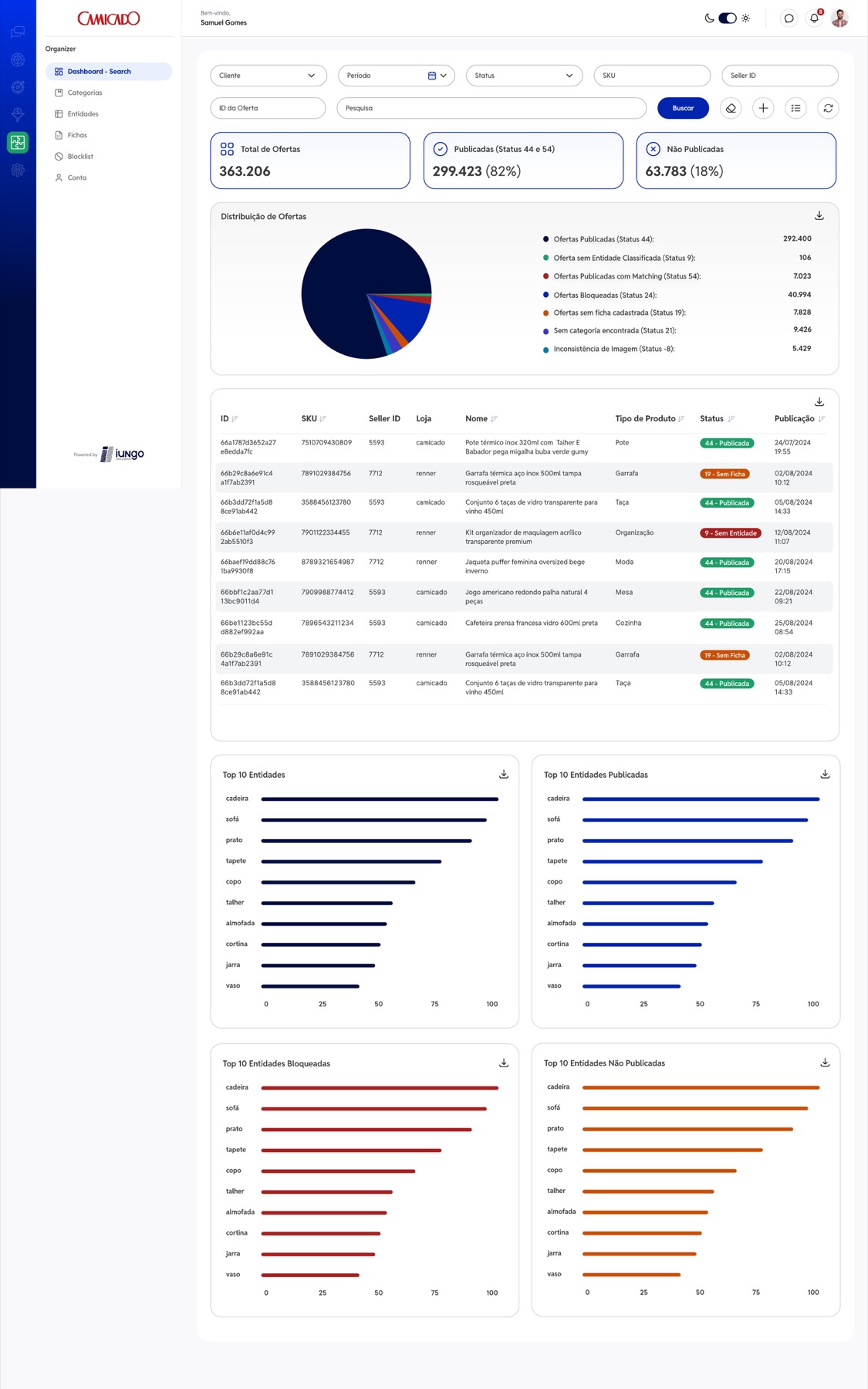
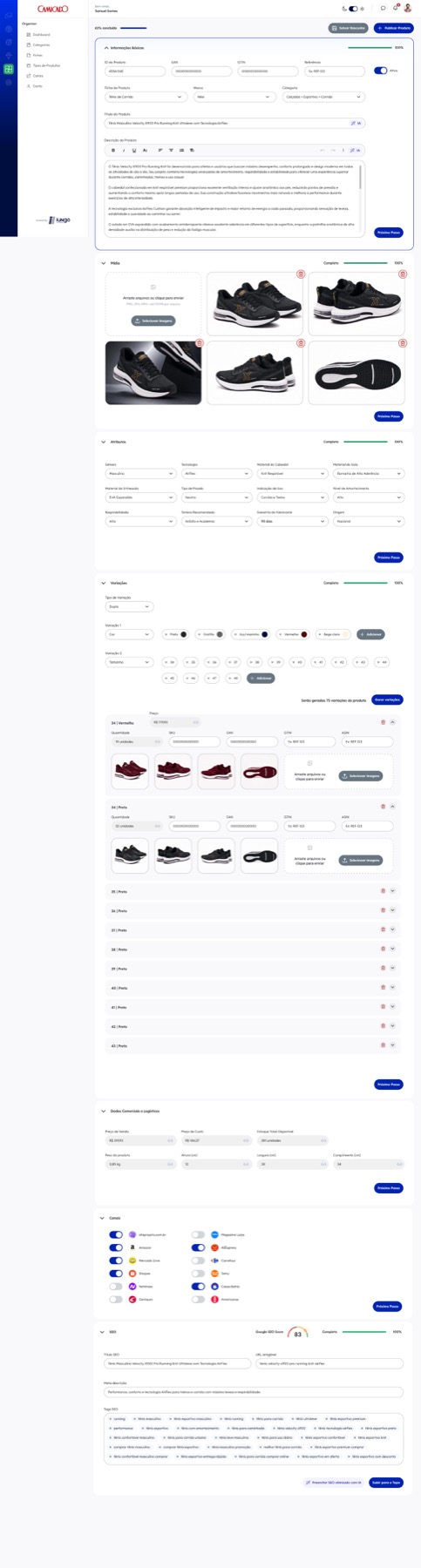
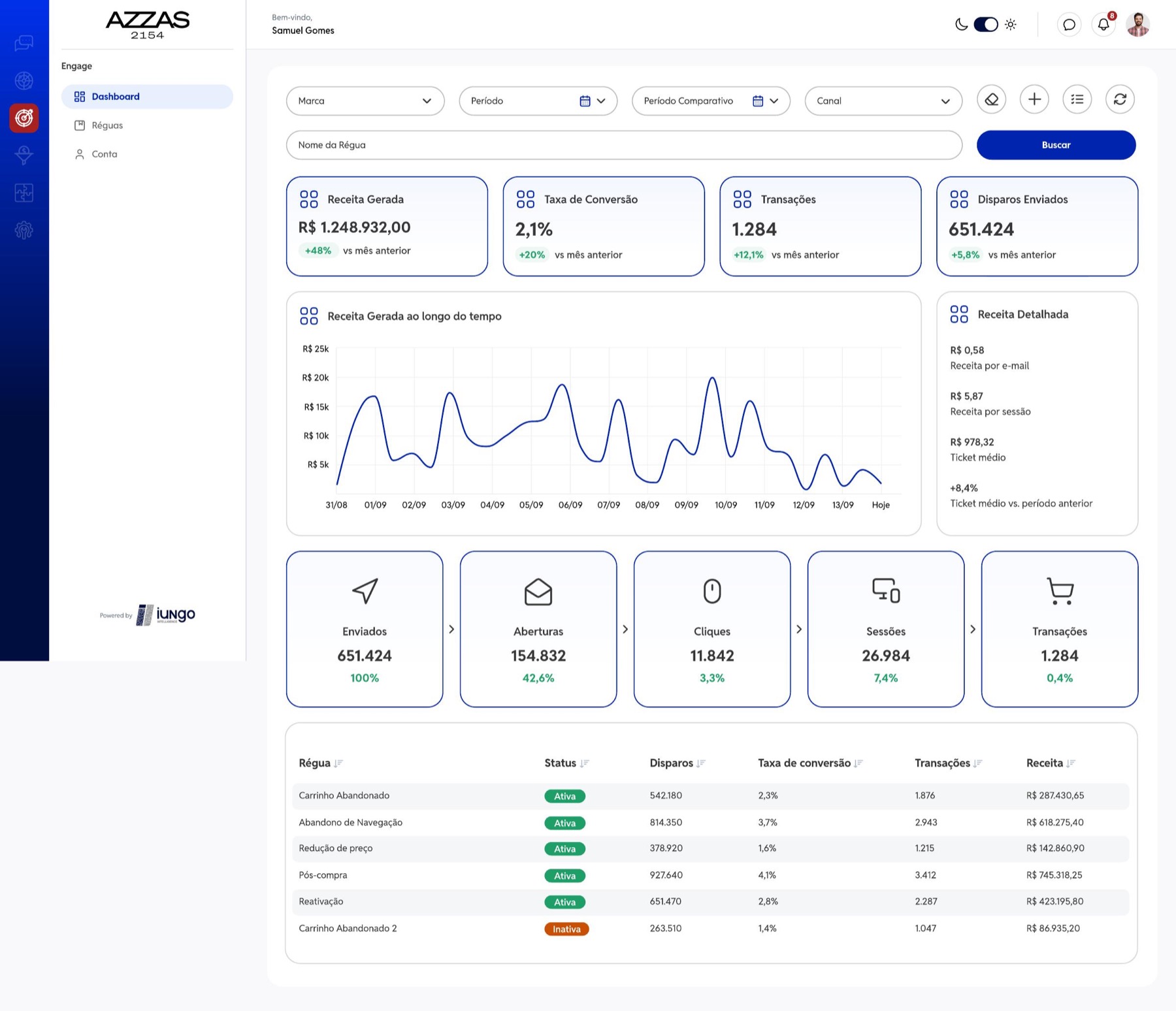
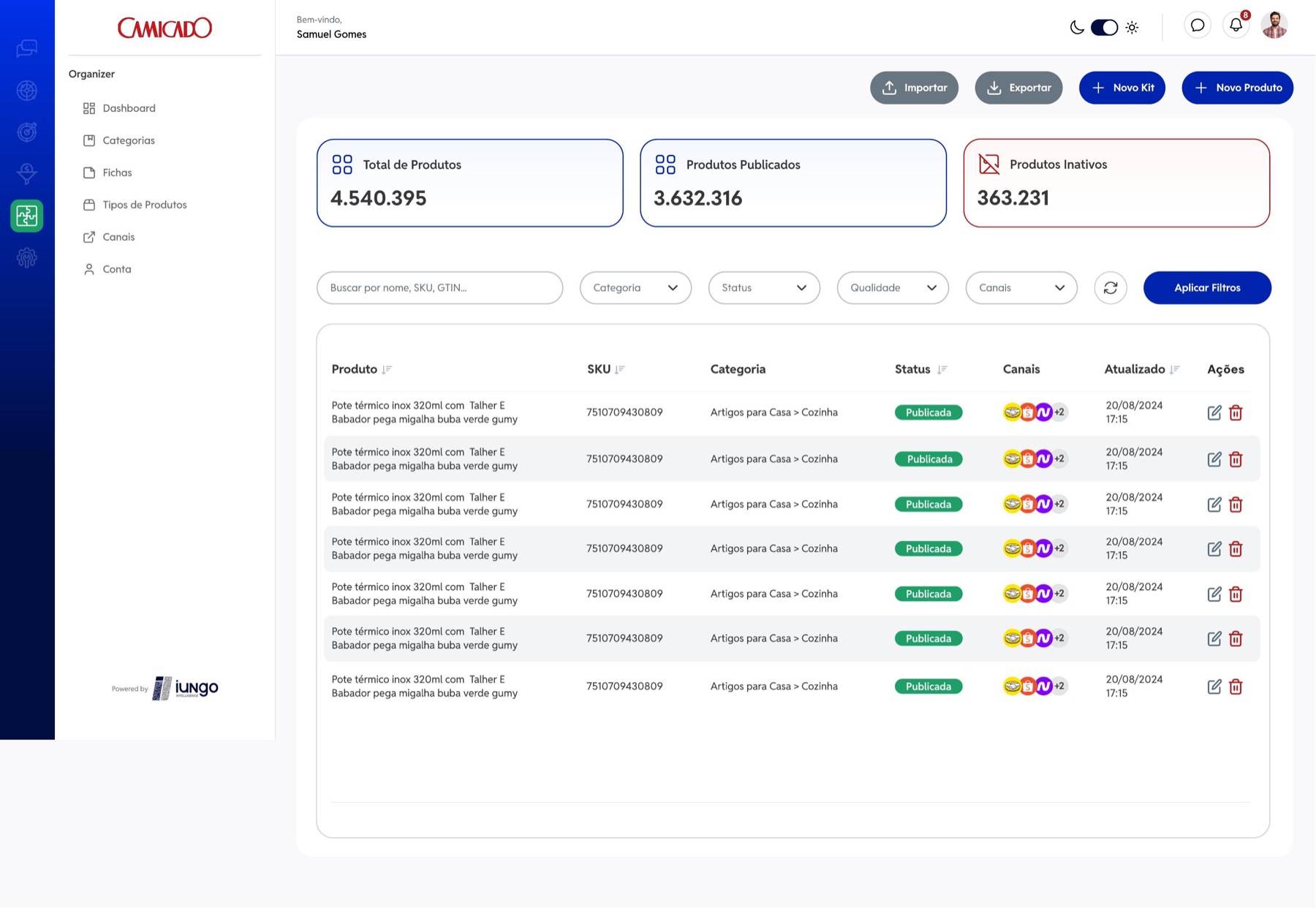
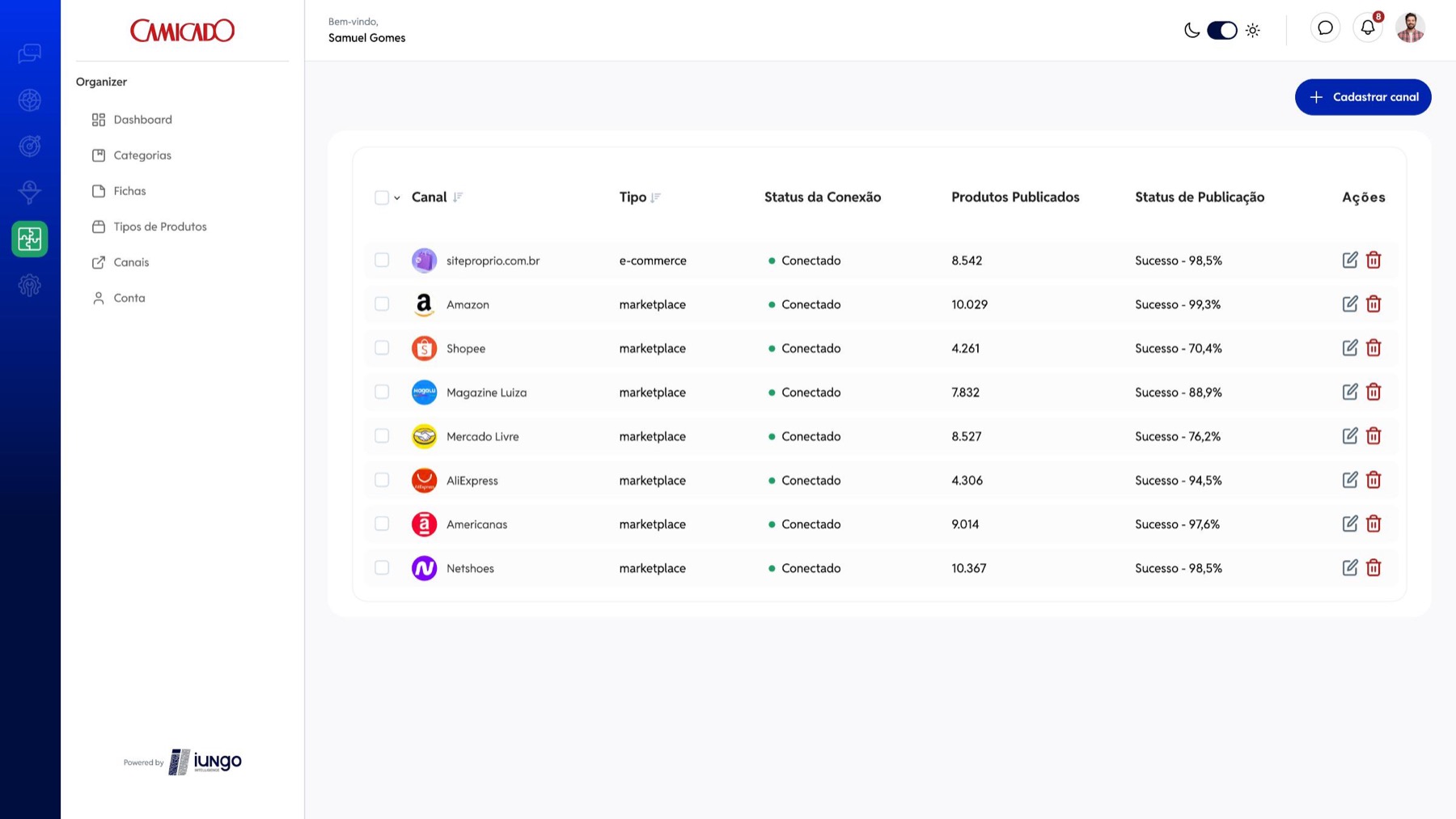
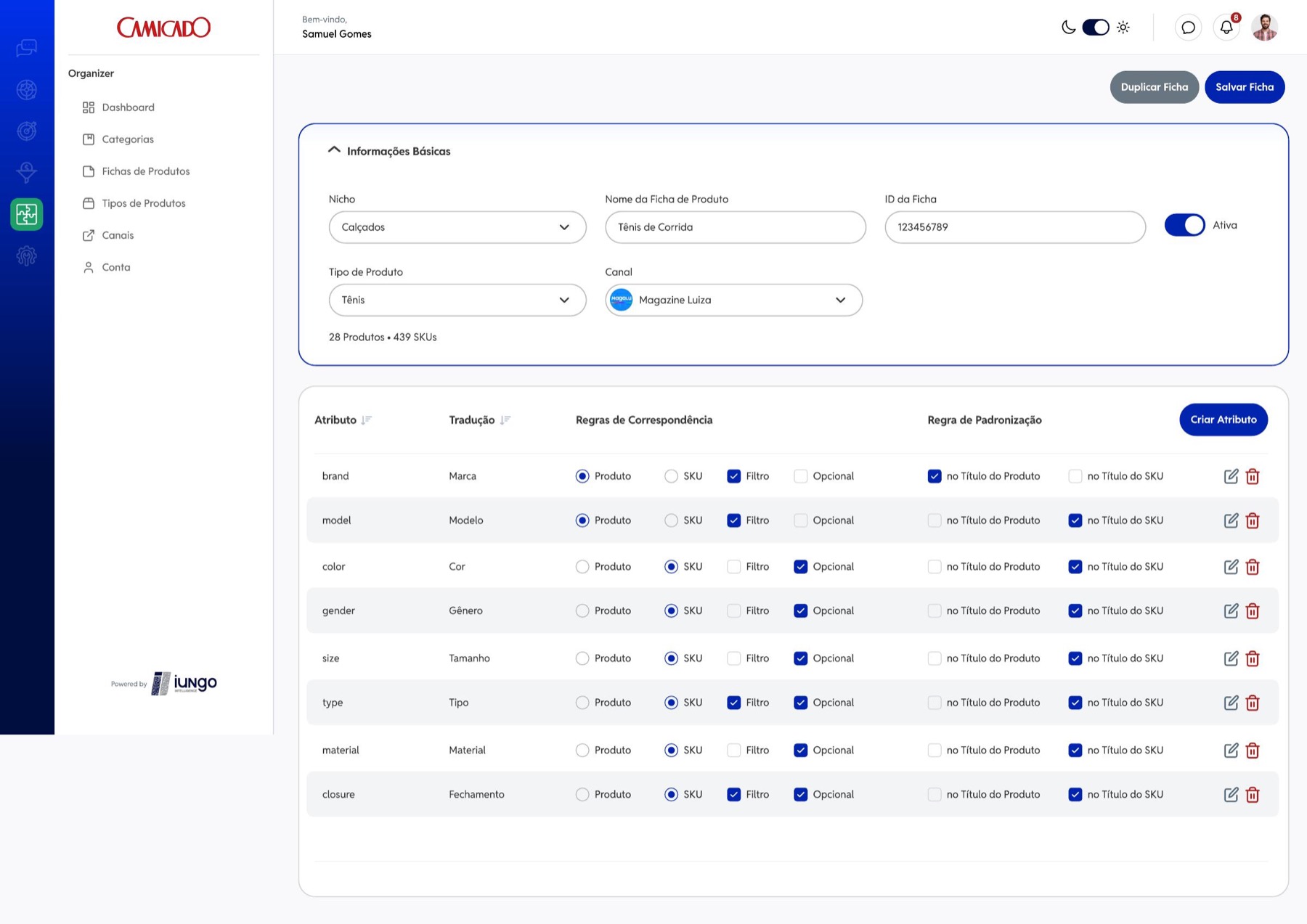
Two products became the strongest expression of the system. Organizer addressed the operational foundation of commerce: catalog structure, product information, entities, attributes, publication quality, channels, and AI recommendations. Engagement connected activation to outcomes, bringing campaigns, conversion, transactions, revenue, and customer behavior into one performance view.
The full suite connected seven product roles: Tracker monitors the customer journey and signals; Hyper-Personalization adapts experiences; Organizer structures product data; Collect brings data and signals together; Engagement activates audiences and measures outcomes; Advisor guides decisions; and Concierge supports the conversation through completion.
Approach and process
Discovery began by mapping the people, decisions, and operational dependencies behind the suite. I worked across product, engineering, AI, and commercial stakeholders to understand where the system needed to reduce ambiguity, expose status, automate repetitive work, or help teams act with more confidence.
The work moved through product architecture, information architecture, journey mapping, UX flows, interaction models, and high-fidelity UI. I used Organizer and Engagement as anchor products to define reusable patterns for dashboards, tables, filters, statuses, configuration, data density, AI suggestions, and performance reporting.
The design system was created as a product foundation rather than a visual library alone. It connected brand, type, color, layout, components, icons, states, and interaction rules so new solutions could feel related without becoming indistinguishable.
Key design decisions
The first design decision was to treat the suite as one ecosystem with distinct product jobs. Organizer prepares the product offer and improves catalog health. Engagement helps teams understand what is happening, which audiences are responding, and where commercial value is being created.
The second decision was to make complexity progressively legible. High-level dashboards establish context before dense operational views expose detail. Status, filters, hierarchy, and clear next actions help users move from understanding to intervention without losing the broader picture.
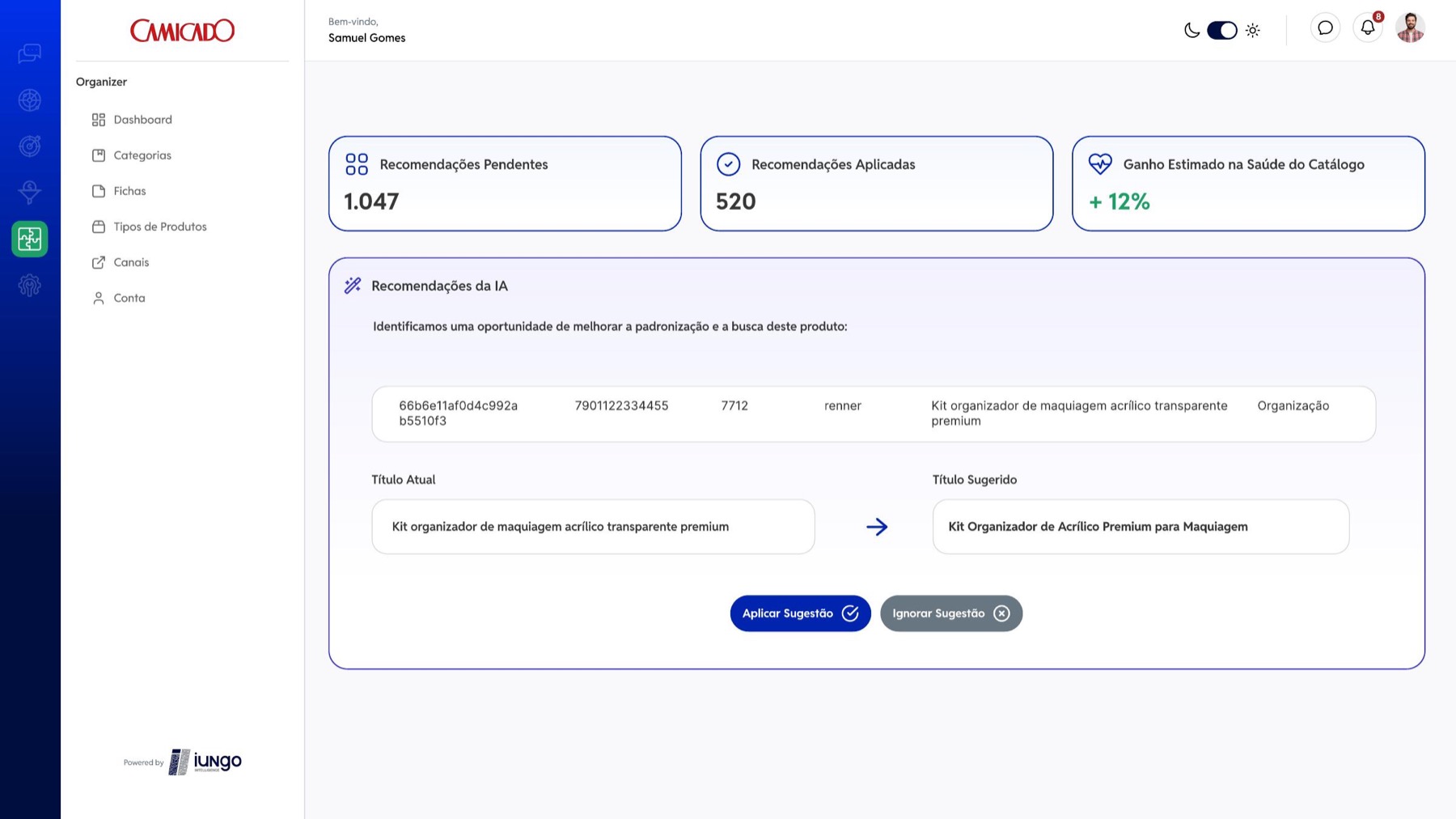
The third was to make AI useful inside the workflow. Suggestions, enrichment, and recommendations appear at the moment they can reduce effort, with enough context for a user to review, trust, and apply them.
Final experience and visuals
The visual identity gives the suite a sense of energy without turning AI into decoration. Glossy, colorful icons create a recognizable family for the products, while the interface language stays disciplined: strong hierarchy, clear status colors, structured data views, and deliberate use of contrast.
The screens show the design operating at multiple scales: Organizer dashboards, product and catalog workflows, AI recommendations, channel operations, and the Engagement performance dashboard. Together they demonstrate how the design system carried a consistent UX language from strategy to final delivery.

Outcomes and learnings
The outcome was a connected product foundation that teams could use to explain, design, and extend the Iungo AI Suite. Organizer and Engagement became tangible products rather than abstract capabilities, each with a clear user, workflow, and value proposition.
My contribution connected senior-level product thinking with hands-on UX/UI execution: a coherent architecture, a scalable design system, and final screens that make complex commerce operations more visible, more actionable, and easier to evolve.